
Cougs Camping With Cows
Many college seniors spend spring break traveling or relaxing, but that's not the case for everyone. At Washington State University, a small group of students traded vacation for a very different kind of experience, camping in a cow pasture with no cell service.
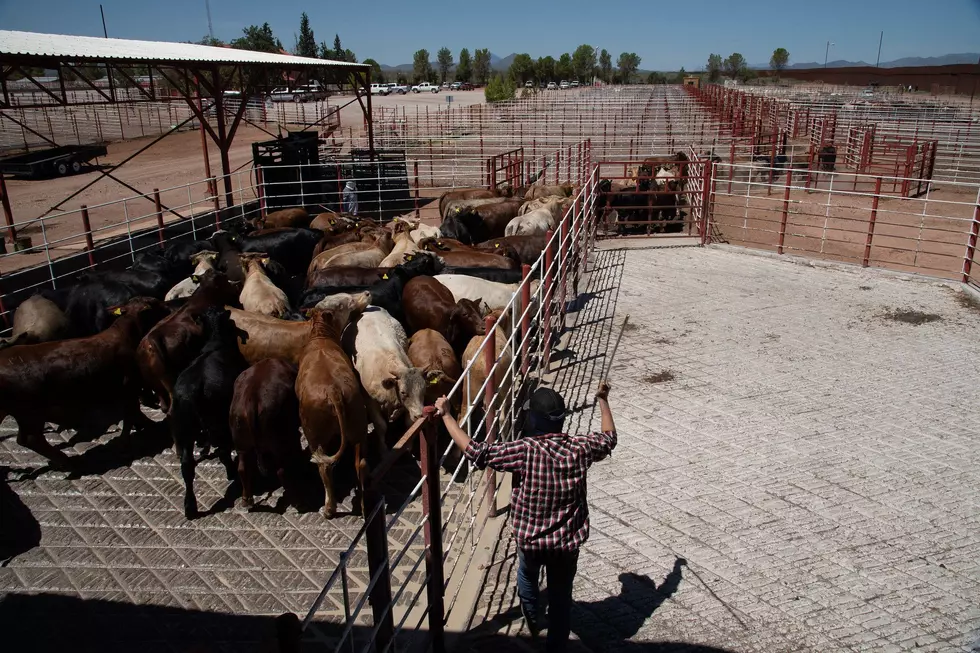
As part of a hands-on animal sciences course, four students spent their break monitoring more than 120 pregnant cows in remote canyon rangeland above the Snake River. Ryan Goodman, WSU beef cattle operations manager, teaches the WSU Department of Animal Sciences course, and said the spring break course is selective.

“We want students who will get the most out of the experience,” Goodman said. “What we’re doing is pretty advanced, and we need students who plan to work with large animals in their professional career.”
Real World Ranching
Each day began at 6 a.m., with multiple herd checks across 1,200 acres. Students looked for newborn calves and signs of distress.
Normally, cows give birth quickly and without much of a challenge. On one check, however, a cow was acting mildly agitated as the students drove past. Then on the return to the camper roughly 20 minutes later, they noticed that cow with a new calf lying next to her.
But when one heifer showed complications, students stepped in—working with faculty to safely deliver the calf.
“We walked with her from the far side of the pasture and got her almost to the pen, when she turned and ran right back,” said Naomi Turner, originally from Springdale, WA. “These hills are steep, and we were exhausted doing that all again. These cows are bred for this environment, so she climbed the canyon walls with ease. We got her into a pen where Ryan [Goodman] was able to coach us through the situation.”
“The calf was upside down and backwards,” said Goodman, who broke his arm a few weeks before calving season started. “Normally, I can take care of that, but this year I needed help. It was so hard to sit back and watch. But with help from Dr. Zachary Seekford [a WSU animal sciences faculty member], we got the calf out safely. Naomi and Laurin did a perfect job helping the mother.”

Dozens of other students rotate through the program, gaining experience at different levels.
A Truly Hands-On Environment
"Ryan presented [the spring break opportunity] as having to give something up, like it could be a deal breaker,” Turner noted. “It was the exact opposite for me; this experience was a selling point. This class has built on everything we have learned since our first year here, allowing us to apply our knowledge in a hands-on environment."
University leaders say opportunities like this are key to preparing future veterinarians and animal science professionals.
Providing students with immersive, real-world experiences is central to WSU’s mission and critical to training the next generation of animal science and veterinary professionals, noted Raj Khosla, Cashup Davis Family Endowed Dean of WSU’s College of Agricultural, Human, and Natural Resource Sciences.
“It speaks volumes about our students that they choose to spend their spring break caring for animals and supporting real agricultural operations” Khosla said.
This Was Amazing
“I would’ve been down there the entire week, if possible,” said Laurin Ogg, who like Turner, is slated to graduate in May. “It was an amazing experience, and I can’t think of a better way to spend spring break. I hope future students will appreciate this valuable experience as much as we have.”
If you have a story idea for the PNW Ag Network, call (509) 547-1618, or e-mail glenn.vaagen@townsquaremedia.com
More From PNW Ag Network