
Smaller Cattle Herd Means Market Volatility, AFBF Says
It’s well-known that the U.S. cattle herd continues to shrink. The January U.S. Cattle Inventory report showed the total inventory at 86.2 million head on January 1st, down 300,000 head year-over-year.
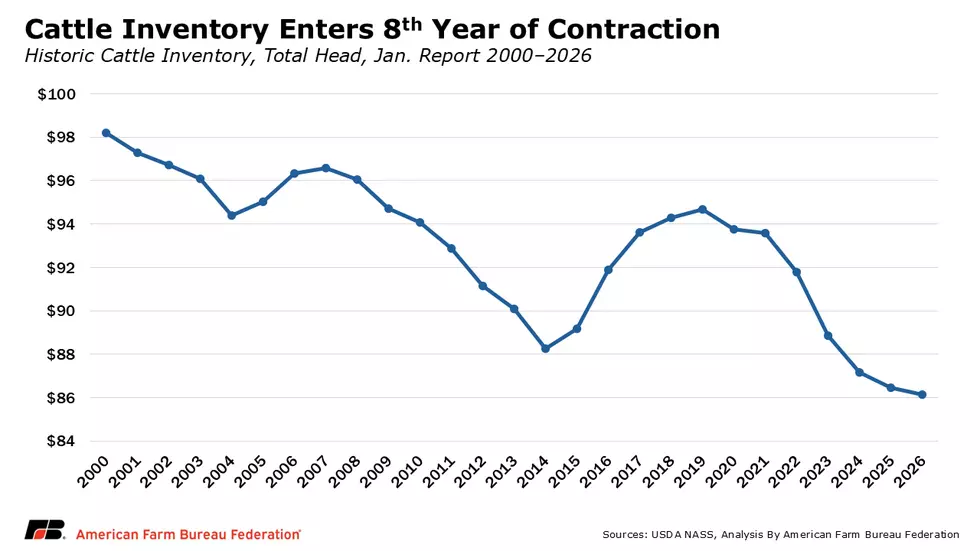
American Farm Bureau analysis showed the combination of fewer beef cows and a declining calf crop means the 2026 calf crop will likely continue to trend downward because there are fewer calves available for the breeding herd, even if more heifers are kept for breeding purposes.
The AFBF added cattle inventory will likely not expand until at least 2028. Tighter cattle supplies will contribute to higher prices and volatility for cattle and beef in 2026. Smaller cattle supplies paired with strong consumer demand for beef have driven up prices for both cattle and beef.

With cattle supplies this tight, markets have become more responsive to news and events that could impact supply and demand. Beef cattle cash receipts have been one of the few bright spots in the U.S. agricultural economy.

Since 2020, approximately 2% of U.S. beef and veal imports originated from Argentina. Argentina has a tariff rate quota into the U.S. of 20,000 metric tons per year with exports above this volume tariffed at 26.4%. Beef coming into the U.S. from Argentina is grass-fed beef and is used as lean trimmings for ground beef.
The October announcement proposed to increase the TRQ from 20,000 metric tons per year to 80,000 metric tons per year. Industry experts do not believe increased imports from Argentina will have a measurable impact on prices paid by consumers for beef. However, the market response following the October announcement was substantial.
Following the announcement, the five-market average cash cattle price fell 13%, from $239/cwt before hitting its low price of $207 on November 28th. In addition, feeder cattle and live cattle futures experienced several limit down (the maximum range for a futures contract in a single trading session) trading sessions following the announcement. Since that time, cash cattle prices have, for the most part, recovered.
If you have a story idea for the PNW Ag Network, call (509) 547-1618, or e-mail glenn.vaagen@townsquaremedia.com
More From PNW Ag Network