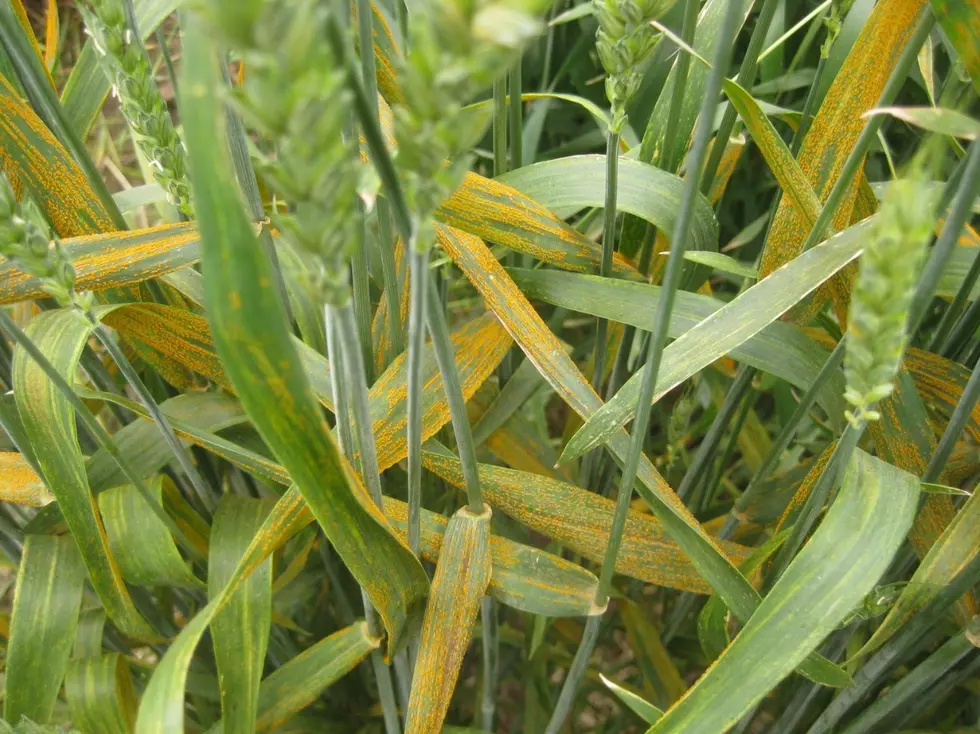
Stripe Rust Expected To Be Challenging In 2026
Washington State University is out with its first stripe rust forecast of 2026. Based on the weather data from November and December, stripe rust in the coming growing season is predicted to be in the top range of severe epidemic level.
That means 40-60% yield loss on susceptible varieties.
Using a set of forecast models based on the weather data of these two months, potential yield losses in 2026 caused by stripe rust on highly susceptible winter wheat varieties are predicted to be in the range of 35.3 to 78.2% with an average of 56.7%. The predicted severe epidemic level is attributed to the relatively warm weather so far.
Based on the potential epidemic level, yield losses of commercially grown varieties are predicted to be up to 40%, depending upon the level of resistance or susceptibility of individual varieties.
WSU will produce their next forecast in early March.
According to Washington State's current forecast, fields planted with winter wheat varieties with stripe rust ratings 5 (moderate, M) to 9 (susceptible, S) may need early fungicide application at the time of herbicide application. Resistant (ratings 1 and 2) and moderately resistant (ratings 3 and 4) spring wheat varieties should be selected to plant, and variety with MS and S ratings (6 – 9) should be avoided. The tables below have rust ratings of winter and spring wheat varieties based on the tests in 2025.


If you have a story idea for the PNW Ag Network, call (509) 547-1618, or e-mail glenn.vaagen@townsquaremedia.com
More From PNW Ag Network