
Canada Caught In The Middle Again
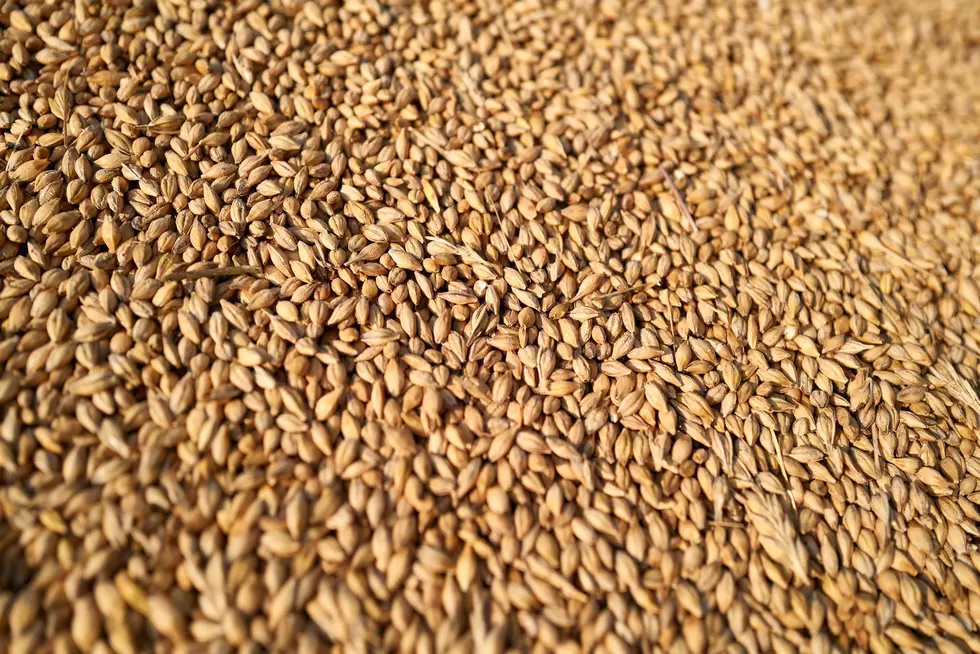
Canadian farmers have been told that their biggest customer, China, has once again imposed a huge tariff on Canada’s largest oilseed export crop, effective immediately. But China did not say how long the tariff will remain in place.
China has hit Canadian canola seed with a 76% duty, following a Chinese anti-dumping investigation. But a former trade advisor believes this most recent move by China against Canada ties directly to the 100% tariff that the former Biden administration imposed on Chinese electric vehicles. Almost a month after that move, Canada followed the U.S. and matched the U.S. tariff on Chinese EVs.
Time Is Running Out
Bill Hawkins, former chief of staff in the Canadian International Trade Ministry, said that when Canada followed the U.S. in imposing the Chinese EV tariff last September, Canada would review that tariff stance a year later. The decision deadline is fast approaching.
“Canada announced that, within one year, we would review those tariffs. And what China has done, now, about a month ahead of our one-year anniversary, is they’ve doubled down on the only remaining aspect of the canola trade, and that is on seed," Hawkins said. "It’s about a $4 billion trade for Canada. They’ve indicated they could remove them at any time. Which is, of course, some strategic leverage in advance of our decision this fall as to what we’re going to do.”
Back in 2019, China placed high tariffs on Canadian canola in response to Canada arresting a Chinese corporate executive at the request of the American Justice Department. However, China made no such moves against the U.S. over that event.
Is This A Message To The United States?
Hawkins believes that history is repeating itself here. China wants the U.S. to lift its Electric Vehicle tariffs and is using this latest canola tariff on Canada to send a message to the U.S. over its continued EV tariff.
"They didn’t retaliate at all against the United States,' Hawkins pointed out. "But in Canada’s case, they put very significant tariffs on our canola products to do what is reflective of the Chinese proverb, ‘To scare the monkey, kill the chicken’. That’s the Chinese way of saying, in order to deter others, you’ve got to crack down on the best victim. So, they chose Canada, hitting us right where it hurts in the agricultural space. It’s entirely reflective of that.”
It should be noted that, in the face of Donald Trump’s global trade actions, while other nations have threatened retaliation, only Canada and China have followed through on counter-tariffs against the U.S.
Now, Canada is taking the economic brunt of tariff action by the world’s two largest markets; China and the U.S. Hawkins says that Canada, along with the free-trading world, is being told by both of those economies that every country must now pick a side.
“Canada and the Western world are all being pressed by the United States to pick a side," he pointed out. "Whose economy in this modern, effectively cold-war, between the legacy power of the United States, and the rising power of China – black versus white characteristics - two different fundamental camps.”
If you have a story idea for the PNW Ag Network, call (509) 547-1618, or e-mail glenn.vaagen@townsquaremedia.com
More From PNW Ag Network