
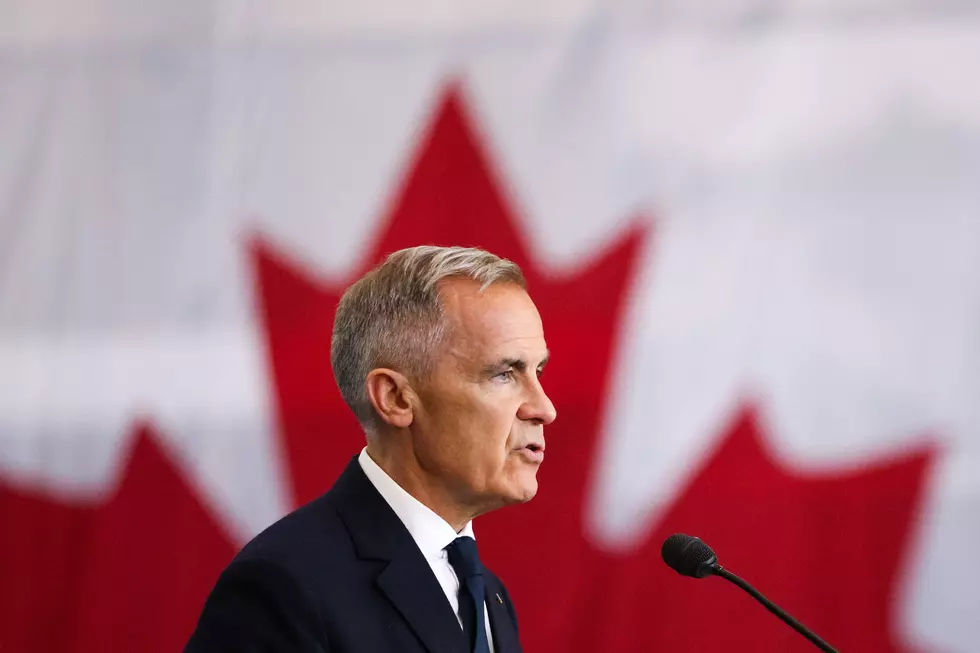
Carney’s Popularity Continues To Climb Thanks To Trump
Canadian Prime Minister Mark Carney’s Liberal Party swept all three recent federal riding by-elections held in three different provinces. The British Columbia and Ontario ridings continue to be Liberal strongholds, but the Quebec riding was taken away from the Conservatives. The three wins, and their resulting parliamentary seats, keep Mark Carney’s majority government. And with that majority in the House of Commons, Canada’s Liberal Party could hold onto power into 2029.
The argument can be made that Mark Carney’s rise to political power and securing his Liberal Party’s majority can be tied directly to most Canadians’ open hostility toward Donald Trump’s tariff policies, along with Trump’s ongoing anti-Canadian rhetoric, threats, and actions.
Abacus Data, a Canadian market research and public opinion polling firm, released numbers showing that Carney’s Liberals get a bump in the polls every time the Trump administration is in Canadian news. And it seems that most Canadians strongly agreed with Carney’s decision to leave the USMCA negotiating table.
“We were in the field last week; we released these numbers on Sunday," said David Colleto is CEO of Abacus Data. "And they showed most Canadians agree that we should have walked away from the deal. Fifty percent approve of the job the government’s doing on this issue. It’s the issue that moves their numbers the most. That Mark Carney’s government approval rating is affected more by how people feel about how they’re handling this issue than anything else. Every time Trump returns, it seems to help the Liberals.”

Canada's Political Hand Is Much Stronger Than Trump's
There are no real winners in a trade war, but enduring the financial toll that comes with a protracted trade war requires political will to keep an electorate’s goodwill. Rob Goodman is in the Department of Politics and Public Administration at Toronto Metropolitan University.
“It depends, first and foremost, on really strong public solidarity," he stressed. "If Canada can successfully hold out, its political hand right now is much stronger than President Trump’s hand in the United States. Canadians think this was a good choice to walk away from the negotiations, whereas, in the U.S., Trump’s decision to pursue these tariffs has been much less popular. His approval rating is essentially in the toilet.”
Discussions in Ottawa and Washington revolve around when their negotiation teams will return to the table. But an overshadowing concern for Carney and his government is whether the Trump administration would honor a finalized deal.
The U.S. Signs Agreements In Pencil
Gordon Giffin, who was Bill Clinton’s U.S. Ambassador to Canada, oversaw and managed the first trilateral North American Free Trade Agreement. Giffin believes that Donald Trump’s administrative actions have caused severe damage to the United States’ reputation, and a recent quote by Prime Minister Mark Carney sums it up well.
“The most telling observation that the Prime Minister has made is that he’s concerned that the United States signs agreements in pencil," Giffin noted. "And that’s a legitimate concern. Until Canada and our other partners, be it on trade or any other issue, can rely on the agreement of the United States and put it to bed, we’re in serious trouble.”
Parliament returns to Ottawa’s House of Commons for its fall session on September 21. The current trade war, and Canada’s response, will almost certainly top the agenda.

If you have a story idea for the PNW Ag Network, call (509) 547-9791, or e-mail glenn.vaagen@townsquaremedia.com
More From PNW Ag Network