
Farm Bureau Wants Changes, Updates To Packers & Stockyards Act
The Packers and Stockyards Act is more than a century old, and its purpose remains protecting farmers and ranchers from unfair and anti-competitive practices. But the law and its regulations have repeatedly changed with the livestock industry, and the Farm Bureau says that back-and-forth has created uncertainty.

How Have Changes Made Since 1921 Impacted Producers, Industry?
Congress passed the Packers and Stockyards Act (PSA) in 1921. At that time, AFBF noted, the cost of living post-World War I had significantly increased, and President Woodrow Wilson instructed the Federal Trade Commission to investigate the meat packing industry from the “hoof to the table” to identify and prevent market manipulation.
When the PSA was implemented, it gave the Secretary of Agriculture the direct ability to regulate specified activities of businesses engaged in the marketing of livestock, meat and poultry through the Packers and Stockyards Administration. This included prohibiting packers from engaging in unfair practices, giving undue preferences, manipulating price and supply, and creating a monopoly.
According to the Farm Bureau, over time, the Packers and Stockyards Administration’s ability to directly report to the secretary was eroded. In 1927, the Packers and Stockyards Administration became part of the Bureau of Animal Industry, which in turn eventually became part of USDA’s Agricultural Marketing Service (AMS). Over the next few decades, the Packers and Stockyards Administration alternated between being its own entity or under the umbrella of another agency. This continued until 1994 when the administration became the Packers and Stockyards Division (PSD) and merged with the Federal Grain Inspection Service to become the Grain Inspection, Packers and Stockyards Administration (GIPSA). Most recently, PSD was moved into AMS’ Livestock and Poultry Division as part of the ongoing USDA reorganization.
More Regulation, Or Total Repeal?
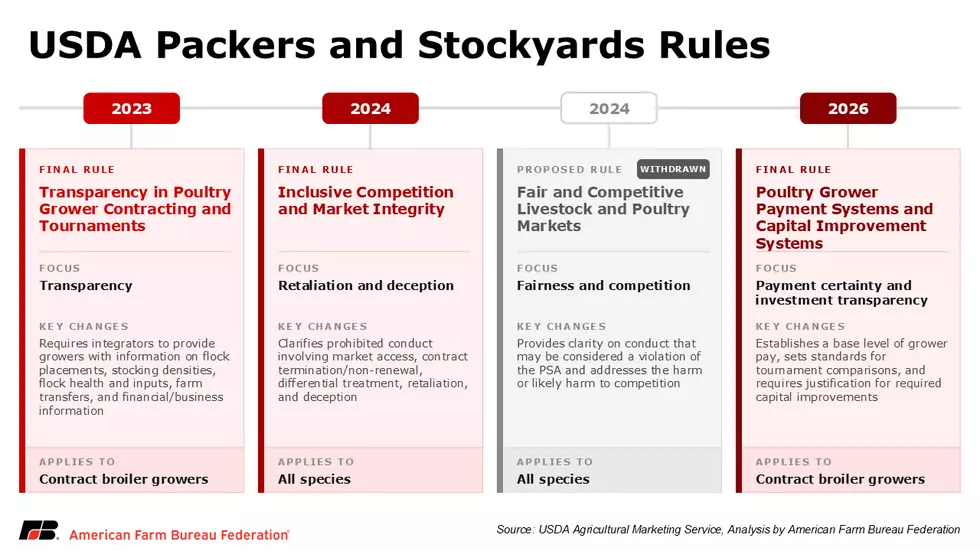
Several more recent efforts have changed the look of PSA, including the 2008 Farm Bill, rulemaking efforts in 2010, as well Congressional Actions between 2021-2025.
Then, last month, President Trump issued Executive Order 14424 directing the Secretary of Agriculture to do a comprehensive policy and regulatory review and report within 60 days on “current enforcement actions, resources needs, and a plan for heightened enforcement for the coming year” and a “review of existing regulations, guidance, and enforcement policies under the Act, as appropriate and consistent with applicable law, revise them to strengthen protections for producers and ensure effective deterrence of prohibited conduct.”
When looking at the history, and the changes, AFBF said the answer isn’t simply more regulation or wholesale repeal. Instead, USDA should preserve the Act’s "core protections" while periodically updating and enforcing them to reflect today’s marketplace. That, the Farm Bureau noted, means clear, consistent rules; effective enforcement against unfair practices; and less regulatory whiplash for producers and businesses.

If you have a story idea for the PNW Ag Network, call (509) 547-9791, or e-mail glenn.vaagen@townsquaremedia.com
More From PNW Ag Network