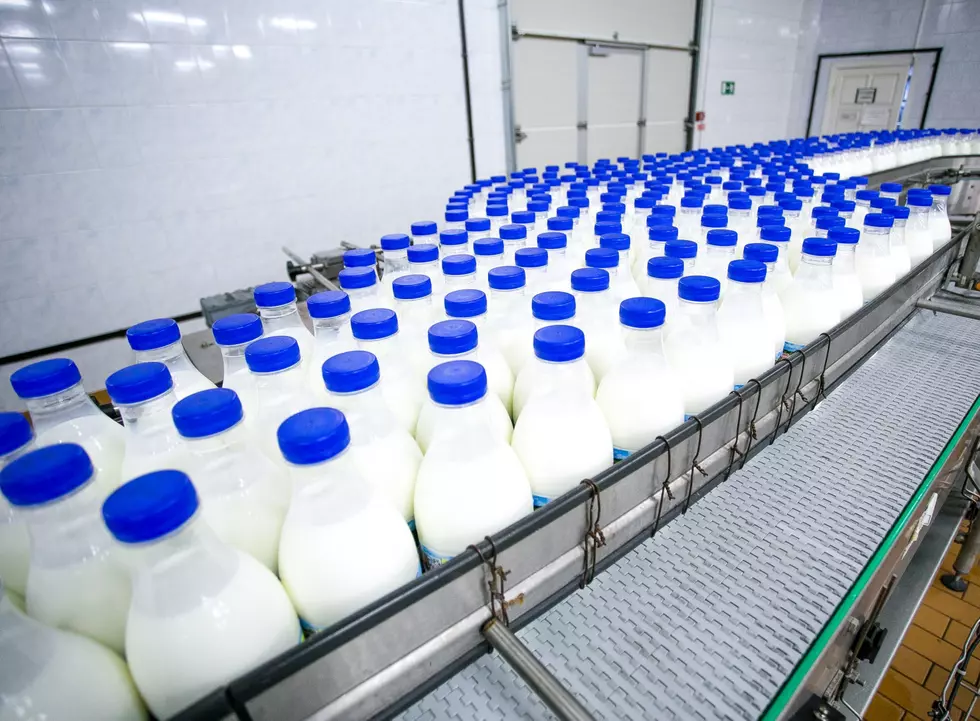

Why Aren’t Prices Moving If Dairy Demand Is Strong?
The dairy market is sending mixed signals. While exports remain strong and demand for dairy protein continues to grow, cheese prices have struggled.
The culprit? Abundant milk supplies.
CoBank dairy economist Corey Geiger said one of the biggest drivers is the booming value of beef-on-dairy calves. He said beef-on-dairy has changed the revenue picture on farms and helped keep more cows in production.
"Dairy farmers are really good at responding to price signals," Geiger said. "Five years ago, beef-on-dairy, cull cows, and beef-on-dairy calves were contributing about 5% to on-farm revenue, with milk checks being the other 95%. Today, we are nipping and pushing close to 20% of revenue on farms are coming from cull cows and beef-on-dairy calves, and so what's happening? We're retaining older cows. The dairy herd is now at the highest level in 34 years, and we're making a lot of cheese."

The Beef Herd's Impact On Dairy
Part of the reason those beef-on-dairy values are strong is a historically tight U.S. cattle supply.
“I use these three numbers when I talk to audiences around the country: 1961, 1951, 1941. 1961 – lowest beef cow herd since 1961," Geiger said. "1951 – lowest livestock herd that includes dairy and beef. And 1941 – lowest beef calf crop. So, right now we are in this little vortex here where we have low beef stocks and dairy cow numbers are going to be up."
Even with softer dairy prices, Geiger said demand isn't the problem. In fact, U.S. exports continue to reach new highs.
Consumers Habits Something To Watch Closely
"Last year, May of 2025, for the first time in U.S. dairy history, we hit 110 million pounds of cheese exports, and that number has never been lower since," Geiger said. "In fact, by February this year, we were at 140 million pounds. Our exporters, our export groups and companies and cooperatives around the country are doing a really good job. We are just making a lot of product right now."
Looking beyond the farm gate, Geiger points to changing consumer habits as another reason for optimism about dairy demand.
"GLP-1 weight-loss drugs," Geiger noted. "It's estimated about 12% of Americans are on it. When you're on a weight-loss drug, you've got to eat high-quality protein. People on GLP-1 weight-loss drugs are eating about 70% of the calories of a normal person. That's what's causing beef sales to be high. The whey protein isolates, milk protein concentrate, the yogurt category is growing double digits. And it's the Greek yogurt with three times the amount of protein. Cottage cheese has grown double digits here for three years in a row, and then the high-protein dairy shake category is growing exponentially right now."

Geiger said dairy's long-term outlook remains tied to growing demand for protein. In the near term, the industry is working through a period of abundant milk production and expanding processing capacity. He expects ups and downs along the way as the market adjusts to these changes.
If you have a story idea for the PNW Ag Network, call (509) 547-9791, or e-mail glenn.vaagen@townsquaremedia.com
More From PNW Ag Network