
Idaho Potato Fields Using Less Water Than Originally Thought
Potato fields in the Gem State may be using less water during peak irrigation season than originally thought.
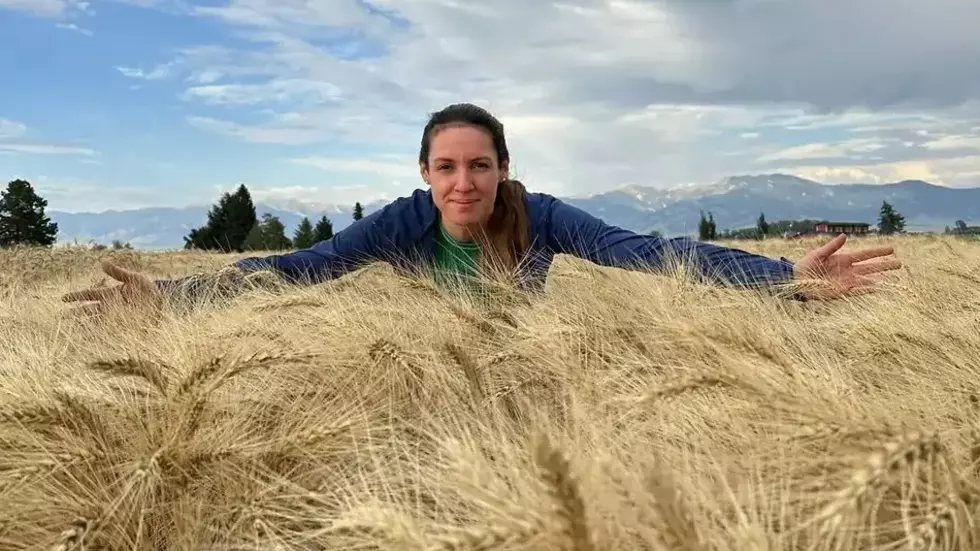
University of Idaho assistant professor of hydrologic science and water management Meeetpal Kukal, has completed the first year of field monitoring aimed at improving how water use is measured in agriculture. His data showed that current estimates for southwest Idaho potato fields may overestimate water consumption by as much as 40%.
Measuring Consumption By Monitoring Release
Water consumption, known as evapotranspiration, or ET, includes moisture stored in plants or released as vapor from soil and leaves. Kukal says even small errors in estimating ET can leave large amounts of water unaccounted for, especially when irrigation systems are under the most strain.

“ET on irrigated crop land is the largest outflux in the system, but ET is also the most uncertain one. Even a little bit of uncertainty in ET results in a lot of unaccounted water,” Kukal said. “We are severely overestimating water needs in the peak season, and that’s the time when our irrigation systems are the most challenged.”
Making Measurements Multiple Times Per Second
Using advanced monitoring towers that measure wind, energy, and water vapor multiple times per second, Kukal is gathering more precise field data. He hopes the long-term research will help the Idaho Department of Water Resources refine water management decisions, and help farmers better schedule irrigation in the years ahead.
“The crop coefficients have their place,” Kukal said. “They’re a useful resource that we have had historically and will continue to serve us, but it’s important to start revisiting and finetuning those to include newer crop varieties and cultivars, and the best technique we have available to us today is the eddy covariance measurements.”
Placing towers in every field would be impractical. Rather, Kukal hopes to use data from his network of monitoring stations to refine and calibrate ET estimates from satellites operated by NASA’s Landsat program.

How Could This Impact Water Consumption In Idaho?
Idaho law administers water rights to users based on the volume of water they divert into canals or pump from wells, granting priority to older water rights. However, much of that water seeps back into the aquifer, where it can be reused downstream. Water managers may track consumptive use in addition to diversions for a fuller picture of how much water is available in the system at any given time.
The Idaho Department of Water Resources predicts how various scenarios might affect the water supply, and it calculates water consumption based on crop coefficients, or ET estimates specific to each crop. These crop coefficients were established in the 1970s using lysimeters, which weigh soil to measure changes in moisture levels. But those coefficients don’t represent differences in potato varieties, soil type and crop management, and it is not well understood how these factors may influence consumption.
Kukal presented his findings at the 58th annual Idaho Potato Conference in Pocatello.
If you have a story idea for the PNW Ag Network, call (509) 547-1618, or e-mail glenn.vaagen@townsquaremedia.com
More From PNW Ag Network