Japanese Beetle Numbers Continue To Increase Across Washington
The Washington State Department of Agriculture has wrapped up its annual survey of pests that could threaten farms, gardens, parks and forests across the state.
Japanese Beetles Numbers Up Statewide
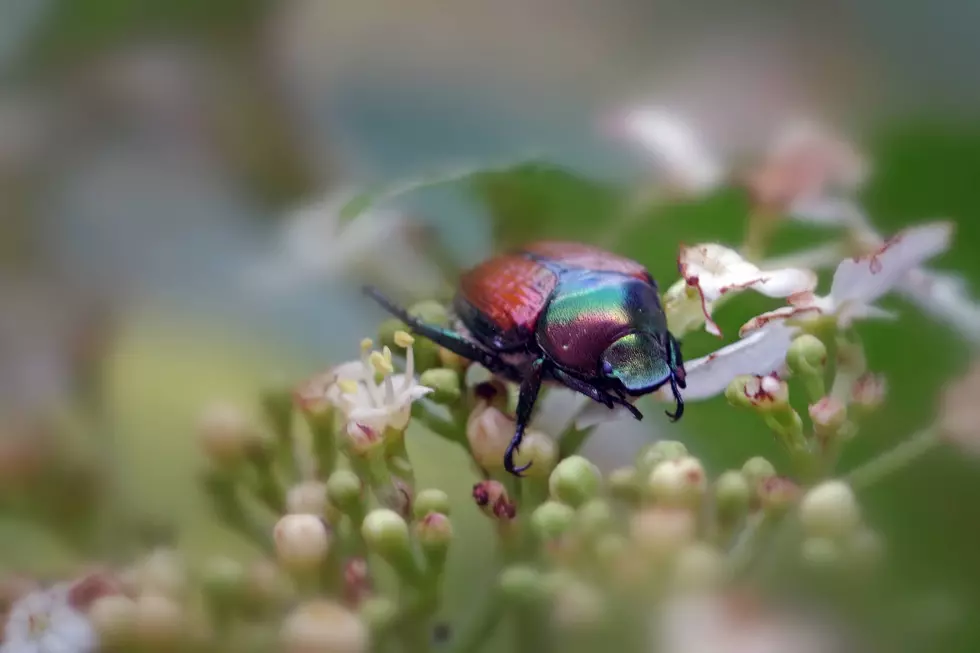
WSDA Pest Program trappers caught 72,626 Japanese beetles this year, nearly three times the number of beetles trapped in 2024. And a majority of those beetles were trapped in south central Washington:
- 68,237 beetles were trapped in Grandview, Sunnyside, Outlook, Mabton and Prosser, up from 24,754 in 2024.
- Wapato saw a decrease in catches with 1,117 catches this year compared to 1,546 catches in 2024.
- The Tri-Cities saw an increase in beetle activity, with numbers rising from 410 in 2024 to 2,407 in 2025.
- In the Tri-Cities, most of the beetles were caught in the Pasco area, although 10 were trapped in Kennewick.
WSDA added areas where the beetles have been detected also expanded. After finding 32 beetles in a residential area of the City of SeaTac in 2024, WSDA increased trapping in the area this year and captured 865 beetles. WSDA anticipates expanding its Japanese beetle eradication efforts to include portions of King County in 2026. WSDA’s Pest Program attributes part of the increase in detections to overall increased trap numbers as well as continued improvement to trapping methodology, such as increased frequency of lure replacements.

“Although we had hoped to see beetle numbers start to go down this year, the silver lining is that we’ve been able to remove a significant number of beetles from the environment, stopping their ability to reproduce and further damage plants,” noted Sven Spichiger, WSDA Pest Program manager.
The Department of Ag added a lack of treatment consent from treatment area residents is also believed to be a contributing factor. Although the treatments are provided free of charge to residents in affected areas, WSDA must first obtain consent every year to treat properties. Despite extensive outreach efforts, in 2024, only 44% of property owners gave consent to have their property treated. In 2025, that number fell to 38%.
“If we are going to protect Washington from this invasive beetle, more properties must be treated," Spichiger said. "That starts with those in the treatment area giving consent for these free treatments. We can't do it without you."
Spongy Month Numbers Decrease
The WSDA noted that 22 spongy moths were trapped in 2025. While this was an overall decrease in moths from 2024, there were concerning concentrations of moths detected in both Kent [King County] and Lakewood [Pierce County].
Spongy moth poses a serious threat to Washingtons forest, park, and neighborhood trees. They can defoliate millions of acres in outbreak years where they are established in the Eastern United States. Despite new introductions of spongy moth in the state nearly every year, WSDA’s Pest Program has prevented the pest from ever establishing in the state for over 50 years.
The program also conducted surveys for spotted lanternfly, which is established in several eastern states. No spotted lanternflies were found in Washington this year.
“When it comes to spotted lanternfly, it is a matter of when, not if, it arrives,” Spichiger said. “We continue to look for it, but this pest is easily identified. The public can play a major role in helping look for and reporting this pest if they see it.”
Watching For The Northern Giant Hornet
Although WSDA declared the northern giant hornet eradicated in December 2024, this year some traps were placed near the site of a previous suspicious report. No hornets were detected, nor any hornet reports confirmed as northern giant hornet. WSDA continues to encourage residents to be on the lookout for and report suspect hornet sightings in case they make their way back to Washington.
WSDA’s Pest Program responded to and confirmed a public report of sunflower broomrape in Yakima County. This was the first-ever detection of this parasitic weed in North America. WSDA has worked with the property owner and the Yakima County Weed Board to remove and burn existing plants. The program will continue to monitor the site. WSDA and has asked the public to look for and report this sunflower pest. No additional reports of this pest have been confirmed.

“This report is yet another example of how the public can and does play a vital role in early detection and protecting our state from invasive pests,” Spichiger said.
The Department of Ag said each year, the Pest Program surveys for over 130 insect, plant and disease pests that could be a threat to Washington.
If you have a story idea for the PNW Ag Network, call (509) 547-1618, or e-mail glenn.vaagen@townsquaremedia.com
More From PNW Ag Network