

Can Blockchain Benefit Agriculture?
Blockchain technology is best known as the technology behind cryptocurrency. But what exactly is it, and what could it mean for agriculture?
In simple terms, blockchain is a shared digital ledger.
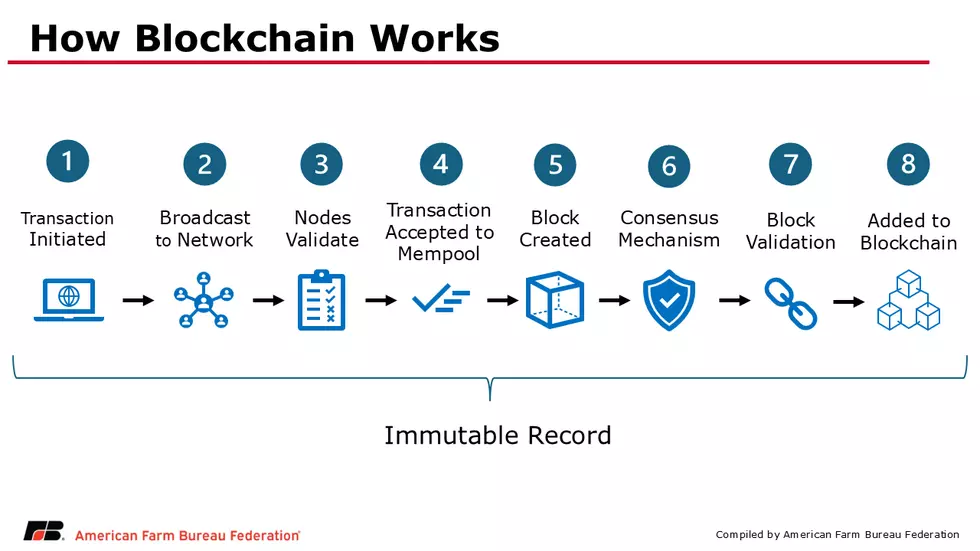
A blockchain transaction begins when a user submits a transaction to the network for review and execution. Upon receipt, a decentralized network of computers, called nodes, checks that the transaction is valid before it can be approved. Because many independent nodes participate, no single party controls the network or its records.
Verified transactions wait briefly in a holding area called a “mempool” before being grouped into blocks. Network participants then agree on the validity of each block through a consensus mechanism that is a set of rules that lets the network settle on a single shared version of the ledger without a bank or other intermediary. Once a block is approved, an algorithm ensures only one accepted version is added to the chain.
Because each block links to the one before it, and because changing the past record would require redoing that work across the entire network, completed transactions become effectively permanent, a characteristic known as immutability. This tamper-resistance is one of blockchain’s defining features.
Many blockchain networks also support smart contracts. Smart contracts are self-executing programs that automatically carry out an agreement’s terms, such as transferring funds, updating records or exchanging assets, once the predetermined conditions are met, without needing a third party. This can reduce transaction costs and increase transparency across many applications.

Three Types of Blockchain Networks
Blockchain networks fall into three broad categories distinguished by who controls them and who can view or add records:
Consortium blockchains are run by a group of organizations that jointly set rules for adding and verifying records and can restrict sensitive data to authorized parties. A system connecting farmers, processors and retailers to improve food-supply traceability is an example.
Private blockchains, usually build for a business or organization, are permissioned and centralized under a single authority. Only approved participants can add or verify records, making this model well suited to sectors like health care and financial services that need to protect sensitive information.
Public [or permissionless] blockchains are fully decentralized where anyone can join, leave, verify or add transactions as long as they follow the network’s rules. Bitcoin is the best-known example.
Potential For Agriculture
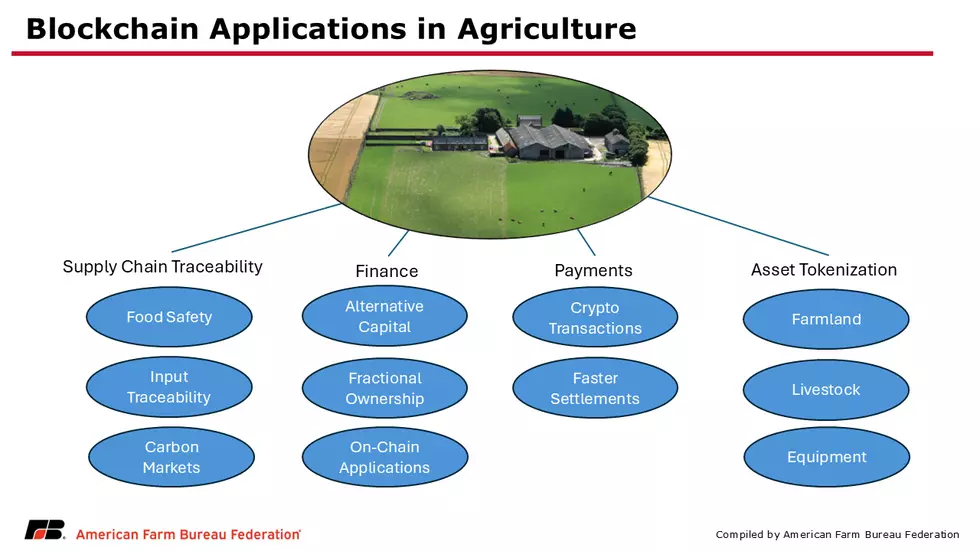
The American Farm Bureau says for agriculture, that could mean tracking food from the farm to the consumer, verifying seeds and other inputs, and documenting conservation practices for carbon markets. Blockchain can also tokenize assets, including farmland, livestock or equipment, dividing ownership or revenue rights into digital shares. Smart contracts could automatically handle payments when agreed conditions are met.
The Farm Bureau added growth of blockchain-based financial services could also have implications for rural banking systems. Community banks provide a significant share of agricultural lending and serve as an important source of financial services in many rural areas. If a larger share of transactions and deposits were to migrate to blockchain-based platforms, traditional financial institutions could experience reductions in transaction-related revenue and deposit funding, potentially affecting their capacity to provide loans and other services.
But, AFBF pointed out risks remain, including fraud, market volatility, data security and regulatory uncertainty
If you have a story idea for the PNW Ag Network, call (509) 547-9791, or e-mail glenn.vaagen@townsquaremedia.com
More From PNW Ag Network