
Big Jump In Fuel Prices Hurting Farmers Who Already Have Tight Budgets
Diesel prices are climbing just as farmers head into one of the busiest, and most fuel-intensive times of the year nationwide: harvest.
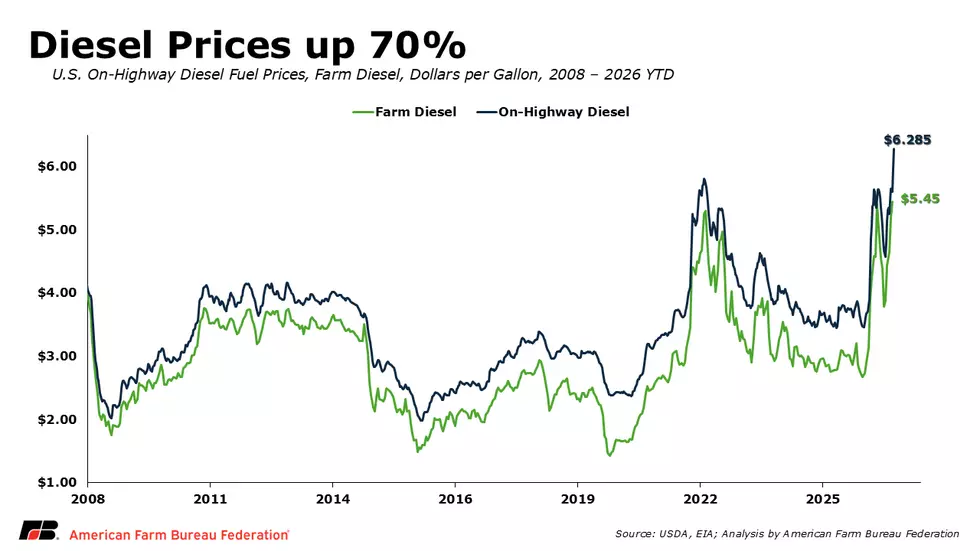
The national average price for on-road diesel is now $6.29 a gallon, up more than $2.50 from a year ago. And here in the Northwest, those prices are even higher, with Washington diesel prices around $7.36, motorists are paying $6.33 a gallon in Idaho, while Oregon’s diesel price is $6.77 a gallon.
The Farm Bureau noted farm diesel is averaging about $5.45 a gallon nationwide, a jump of 80%. And AFBF pointed out higher fuel prices raise costs at nearly every step, from harvest to getting that crop to market.
Crude Prices Up 14% This Month
The Farm Bureau said crude prices are not solely responsible for rising diesel prices. Diesel prices also reflect refinery capacity, inventories and demand for the finished product. When supplies of refined fuel are tight, diesel prices can increase faster than crude oil and can remain elevated even when crude prices temporarily retreat.
U.S. inventories provide relatively little cushion against those market disruptions. Distillate fuel inventories, which include diesel and heating oil, fell from approximately 127.2 million barrels in January to 109.4 million barrels in June, a decline of nearly 18 million barrels, or about 14%. When stocks are high, the market has more flexibility to respond to refinery outages, transportation disruptions or stronger demand. When inventories are already tight, those same disruptions can translate into larger and faster price movements.
Current stocks are also low compared with levels during much of the past decade. U.S. distillate inventories regularly exceeded 140 million barrels during portions of the 2010s and climbed well above that level in 2020. Since then, inventories have generally remained much tighter.

Exporting Fuel
At the same time, U.S. refiners are supplying a significant amount of distillate fuel to international markets. The United States exported approximately 456 million barrels of distillate fuel in 2025, compared with about 473 million barrels in 2024. Imports totaled only about 58 million barrels in 2025. Mexico remained the largest market for U.S. distillate exports in 2025, accounting for about 17% of total exports. Other major destinations included Chile, Brazil, the Netherlands and the United Kingdom.
That trade reflects the structure of the U.S. refining system, particularly along the Gulf Coast where refineries are closely connected to international markets. Exports themselves are not new, but they become more important to watch when global fuel supplies tighten. Higher international prices can increase demand for U.S.-produced fuel at the same time domestic inventories are already limited.

With farm budgets already tight, AFBF pointed out these added costs can further squeeze farmers’ profits, even if commodity prices improve. The Farm Bureau added until crude prices ease, global fuel supplies improve or U.S. inventories rebuild, diesel is likely to remain a significant source of cost uncertainty for farmers heading through harvest and into the 2027 production year.
If you have a story idea for the PNW Ag Network, call (509) 547-9791, or e-mail glenn.vaagen@townsquaremedia.com
More From PNW Ag Network