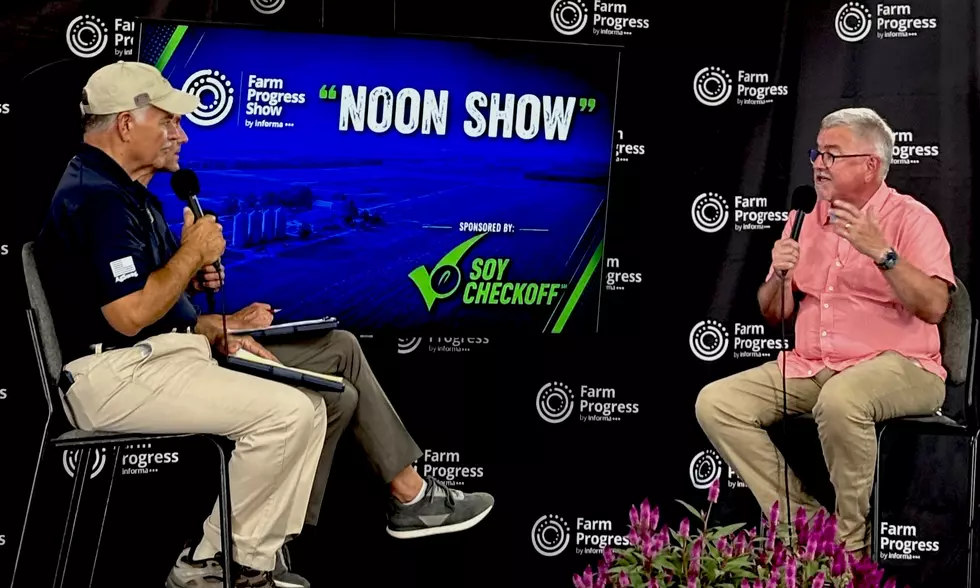
Fordyce Talks About Input Costs, Beef & More
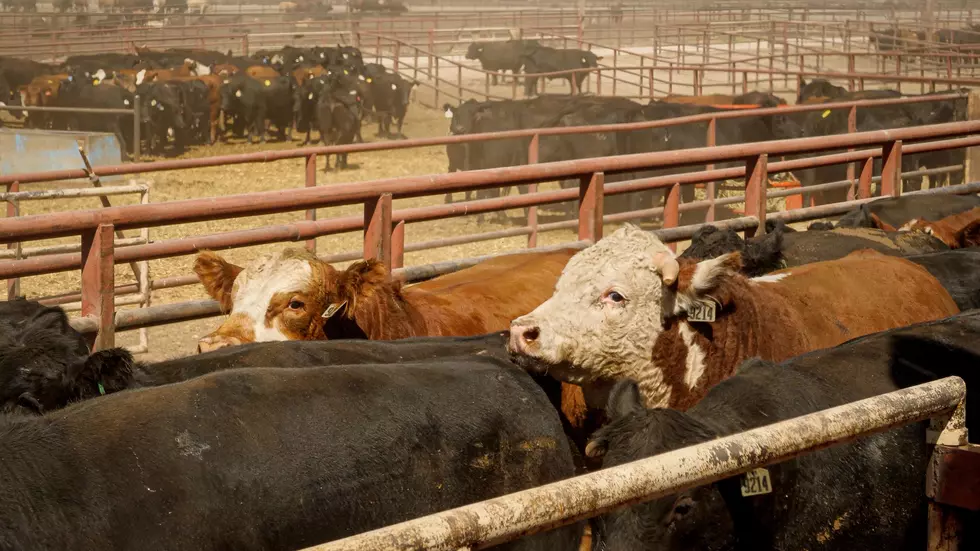
USDA Undersecretary Richard Fordyce recently took time to visit dairy, beef, and crop farms, talking with producers about the challenges facing agriculture. He said one long-term solution to rebuilding the nation's beef herd may be shifting more cattle production into regions with more dependable forage supplies.
"I've said for a long time, I think we could find innovative ways to increase beef numbers where we have kind of more predictable forage and certainly help respond to our producers in more of the Western states where they are short of feed," Fordyce noted. "I think it could be a combination of a number of things, but I'm from Northwest Missouri and we'll certainly have our dry period in the summertime, but we seem to always have leftover hay. We always seem to have plenty of pasture for cows. So I think it's maybe a rethinking of traditionally how do we raise beef cattle in this country, and again, I think it goes back to having more head in areas that have more predictable forage year in and year out."

USDA Can Do More To Help Growers, Ranchers
Fordyce said USDA may also have policy tools available to help livestock producers access additional forage.
“But I do think USDA, I think there are probably some levers that we can pull," Fordyce added. "Would there be an opportunity at some point to more heavily utilize CRP, for example, in either grazing systems or maybe even haying part of that on a more regular basis? We do have the provisions for emergency haying and grazing. And then we also have managed haying and grazing on CRP, but you can't do it all. You can do all of it over the course of three years. I think it's just, when folks think about doing that, I don't know that it's as palatable as it would be if we were able to kind of figure out a way to make that more available and make it easier to access."

Input Costs Are Too High
Fordyce added one issue consistently comes up when it talks with farm country, the cost of production.
“No matter what segment in agriculture you're in right now, everything just costs more," he said. "The row crop farm that we'd stopped at talked about machinery costs and what it costs to stay current with technology and seed costs and chemistry costs and certainly fertilizer costs. That’s not news, but it's certainly something that agriculture is dealing with on a daily basis."

Fertilizer Is A Priority Moving Forward
One area where the administration is looking for relief is fertilizer availability and supply.
“We're looking at ways that USDA and other places within the administration to be able to help cover costs to onshore additional fertilizer production," Fordyce added. "Those are kinds of things that don't happen overnight, but certainly they're going to prove to be a positive going forward from a fertilizer availability, fertilizer supply chain, fertilizer cost perspective."
If you have a story idea for the PNW Ag Network, call (509) 547-9791, or e-mail glenn.vaagen@townsquaremedia.com
More From PNW Ag Network