Queen Bees Offload Pesticides To Eggs
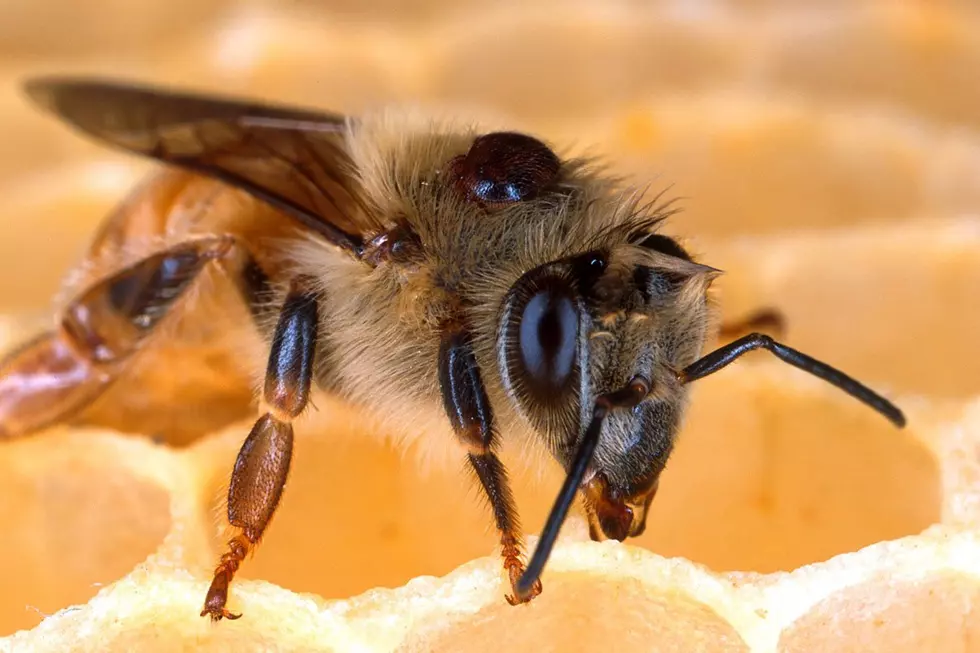
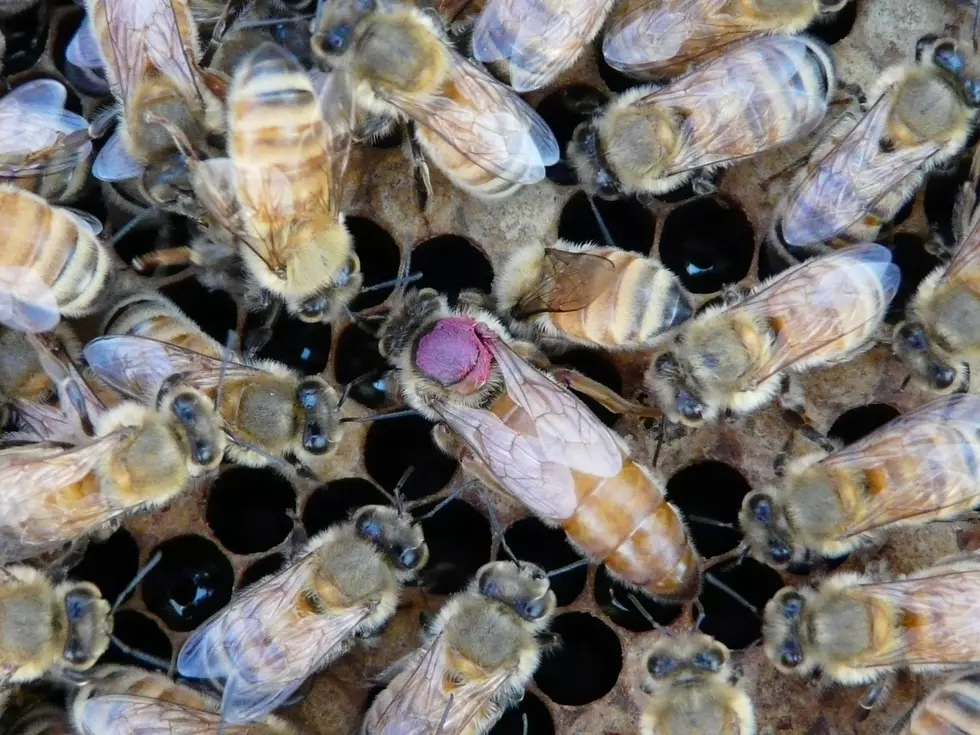
New research suggests honeybee queens have a surprising way of protecting themselves from pesticides, but it comes at a cost. Scientists at UC Davis found that when pesticide levels build up, queen bees pass the contamination into their eggs, a process known as maternal offloading.
"In order to protect herself, the queen bee offloads these chemicals into her eggs to get rid of them,” said Sascha Nicklisch, the paper’s senior author and an associate professor in the Department of Environmental Toxicology. “No one has shown this in honeybees before.”
The study found worker bees initially filter out most pesticide contamination, but that protection weakens over time, allowing chemicals to accumulate in the queen.
“When pesticides accumulate to the extent that the queen bee has eggs that are so loaded they may no longer develop properly, there could be a tipping point,” Nicklisch said. “There may be a slow creeping effect of chemical accumulation that will contribute to delayed colony collapse.”

Researchers said heavily contaminated eggs may fail to develop properly, potentially contributing to delayed colony collapse. The findings, published in the journal Current Biology, could help beekeepers and growers better understand how pesticide exposure affects the long-term health of honeybee colonies.
“In our study, pesticides began to accumulate in queens over time, suggesting that worker filtration capacity can be overwhelmed,” said Angela Encerrado-Manriquez, the lead author on the paper and a recent Ph.D. graduate from UC Davis. “When this happens, queens have their own defense. Maternal offloading allows them to shunt the toxic burden to their eggs.”

Honeybee queens can lay 1,500 to 2,000 eggs per day to support their hives, which pollinate about one-third of the world’s food crops. Losing colonies diminishes agricultural productivity and food security.
“The queen is the only member of the hive who can lay eggs that become the next generation of workers,” Nicklisch said. “She keeps the colony alive, so understanding how pesticides can affect queen bees and also her offspring is important.”
How long queens can pass along contamination, the long-term effects on colonies and if it varies by pesticide are other topics for future research.
If you have a story idea for the PNW Ag Network, call (509) 547-9791, or e-mail glenn.vaagen@townsquaremedia.com
More From PNW Ag Network