
NORAD Expansion Seeks Canadian Farmland
The plan to expand an early warning system for the Canada-U.S. NORAD military system, aimed at improving the Arctic-zone protection, is being welcomed in northern Canada, but not so much in the farm belt of southern Ontario. The ‘Arctic Over-the-Horizon’ Radar Site is part of a $38 billion investment to upgrade Canada’s contribution to NORAD.
Established in 1958, NORAD stands for the North American Aerospace Defense Command, a joint-military command of Canada and the United States, responsible for aerospace warning, control, and maritime advance warnings, to protect North America.
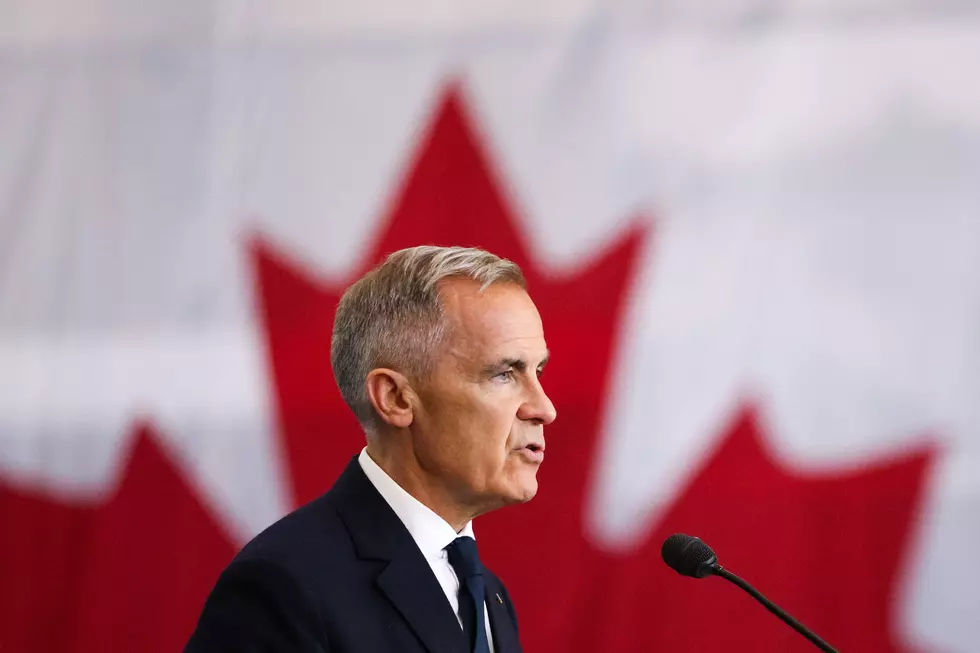
Earlier this year, Prime Minister Mark Carney announced that his government would build what’s called the “Arctic Over-The-Horizon Radar System” to make NORAD more quickly aware of objects approaching and entering Canadian and Arctic airspace.
Expansion Plans Impact Idea Ag Lands In Southern Canada
However, those expansion plans involve thousands of acres of prime agricultural land. Two different southern Ontario rural communities are slated to receive communications installations integral to the System. The Department of National Defense recently held public information sessions in Coboconk, in the Kawartha Lakes Region, east of Toronto, and in Clearview Township just south of Georgian Bay.
The NORAD expansion plan calls for nearly 4,000 acres of prime farmland to be purchased and expropriated, where the plan calls for two separate but relatively closely situated sites.
The Brooks family has livestock and a 700-acre cash-crop operation and is one of several farm operations affected by NORAD’s expansion plans. But Rachel Brooks said her family has no interest in selling any of their second-generation farmland.
Farmland, Small Town Would Be Lost
“They’re looking at installing two sites that would be approximately fifteen hundred acres each, so it’s 3,000 acres," she said. "So, these two sites combined would obliterate a small town. We’ve been working on this land for forty-five years. I have no desire to sell our land. This is where we raise our family, and this is where we have our business.”
Both of the sites in Clearview Township, along with the proposed site in the Kawartha Lakes region, were chosen for being flat and dry, with fairly limited environmental constraints, and close to Southern Ontario’s readily available electrical power sources.
The Hutchinson farm family is one of those affected in Kawartha Lakes. The Hutchinsons run beef cattle and grow cash crops on just over 1,000 acres. Jennifer Hutchinson believes the Department of Defense should find somewhere else for the NORAD project that does not involve food-producing land.
This Will Impact The Food Canadians Eat
“There are animals that feed us," Hutchinsons pointed out. "Wheat that makes our bread. Where are we going to gain that? Where is that going to come from, with the amount of people coming into our province, into Canada? Who is going to feed them? People are not willing to budge. We do not want to move. We do not want to sell. Go find another location.”
The Department of National Defense has already purchased 560 acres in the Kawartha Lakes area, but said that it needs to acquire at least another thousand acres to make the NORAD expansion project viable.
If you have a story idea for the PNW Ag Network, call (509) 547-1618, or e-mail glenn.vaagen@townsquaremedia.com
More From PNW Ag Network