What Goes Into Growing A Real Christmas Tree?
Have you decorated your Christmas tree yet for the holiday season? If your preference is a real Christmas tree, you may be one who is perhaps waiting to find that specialty you tree.
“By and large, that would be determined by species. Noble fir, Douglas fir, Fraser fir, Nordman fir, Turkish fir, Korean fir,” said western Washington Christmas tree farmer John Tillman.
Tillman has seen several changes in his industry over the past decade plus, including parts of the country where Christmas trees are grown and harvested. Places like the deep South, not traditionally associated with Christmas trees.
“The fact is that a lot of the Christmas trees grown here are all local markets,” said John Kushla of Mississippi State University Extension.
The Season Has Come and Gone For Christmas Tree Farmers
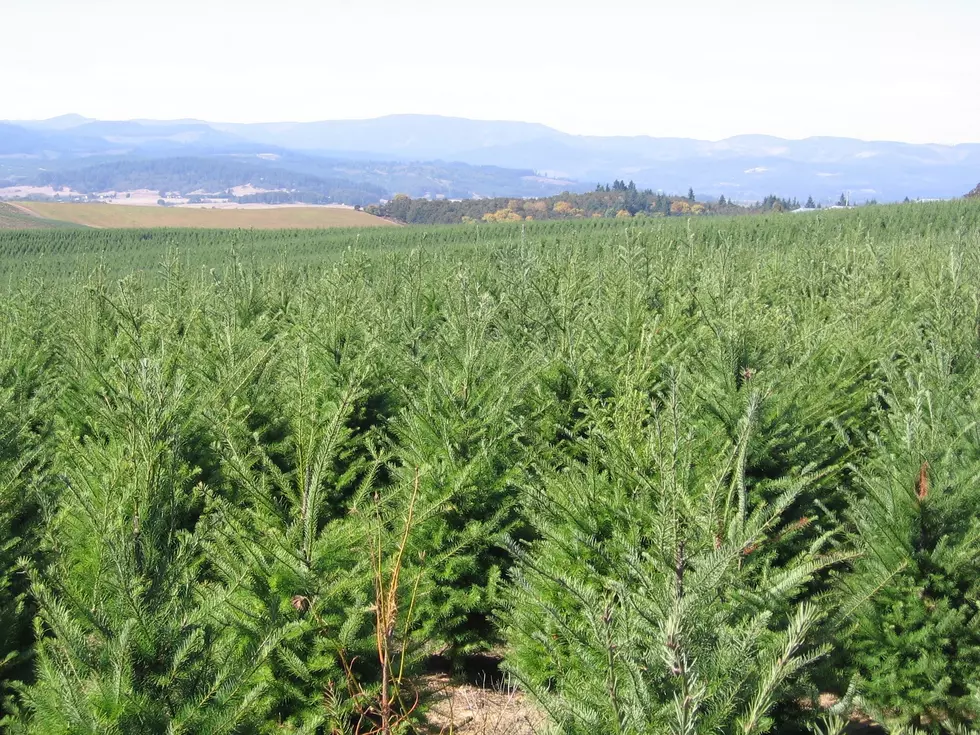
John Tillman's livelihood is as a Christmas tree grower. At about this time in his western Washington tree farm, harvest is winding down or has completed commodities shipped to tree sale lots in different parts of the country or overseas. He has seen quite a few changes in his industry the last decade or so.
“Some of the things that have really made our ability to grow trees easier is understanding what species are more tolerant for wetter ground, more tolerant that do not get a certain fungus or the bugs don't get in,” Tillman said. “So, we're able to utilize more ground than we had before and get trees that need a little less attention. In addition, most Christmas tree seedlings are now coming from very specific seed zones or actually parent trees where the seedlings I'm planting I know came from this seed orchard and so most of the trees in there will have a very distinct genetic quality to them, whether it's color or needles, upright branching, things like that.”
"We are better meeting the demands of consumers"
Tillman added he believes these changes have allowed Christmas tree farmers greater ability to meet consumer demand for real Christmas trees. and what they are looking for regarding the specific Christmas tree to display in their home or office during the holidays.
“What the industry is looking for is a faster growing species that produces a lot of branches so we can fill it out and create different densities,” Tillman said. “Some people like a lighter tree. density tree where there's a little more room for, say, a European style ornaments and something like a nice bushy tree. Where also the main thing we've been doing for the last 25 years or so is trying to grow trees that have genetically proven to be longer lasting capability issues so that when the consumer gets them home, the tree stays fresh longer. And we found different families of trees and species definitely allow us to do that.”
Another change in the Christmas tree industry. where they are grown. Tillman says expansion of Christmas tree production, not traditionally thought of as growing areas, such as the deep American South.
“Once they started planting Leland cypress down in Texas and some of those states down south, they were sure added to the industry and gave people a chance locally then to go out to the farm and purchase,” Tillman noted.
John Kushla of Mississippi State University Extension acknowledges that many Southeastern Christmas tree species cannot tolerate being cut or being out of water for a prolonged time period.
“So they have to be cut live on the farm and taken home at that point,” Kushla said. “Now, they'll last through the Christmas season. Some trees do better than others in that regard, but that's our situation down here.”
Like Any Other Commodity, Research Is Key
Another development in the Christmas tree industry over the past decade, according to Tillman, has been greater efforts in collaboration, promotion, and research through the Christmas Tree Promotion Board an industry checkoff program with USDA oversight, officially effective starting 2014.
“It's 15 cents a tree. And we went to the federal government and asked them to please implement this because everybody has a bit of a different idea,” Tillman said. “And if you're selling all the trees you grow, then I don't need any marketing. Looking long term for our natural product was instrumental. That has helped a little bit.”
Local and state Christmas tree associations also play a role in R&D and marketing of their commodities. So, as you observe your Christmas tree, bear in the Christmas tree farm or tree lot, or after it is decorated, perhaps take a stroll. Visions in your mind to picture how a holiday tradition is crafted with both dedication and pride to be a decorative centerpiece of holiday celebration.
If you have a story idea for the PNW Ag Network, call (509) 547-1618, or e-mail glenn.vaagen@townsquaremedia.com
More From PNW Ag Network