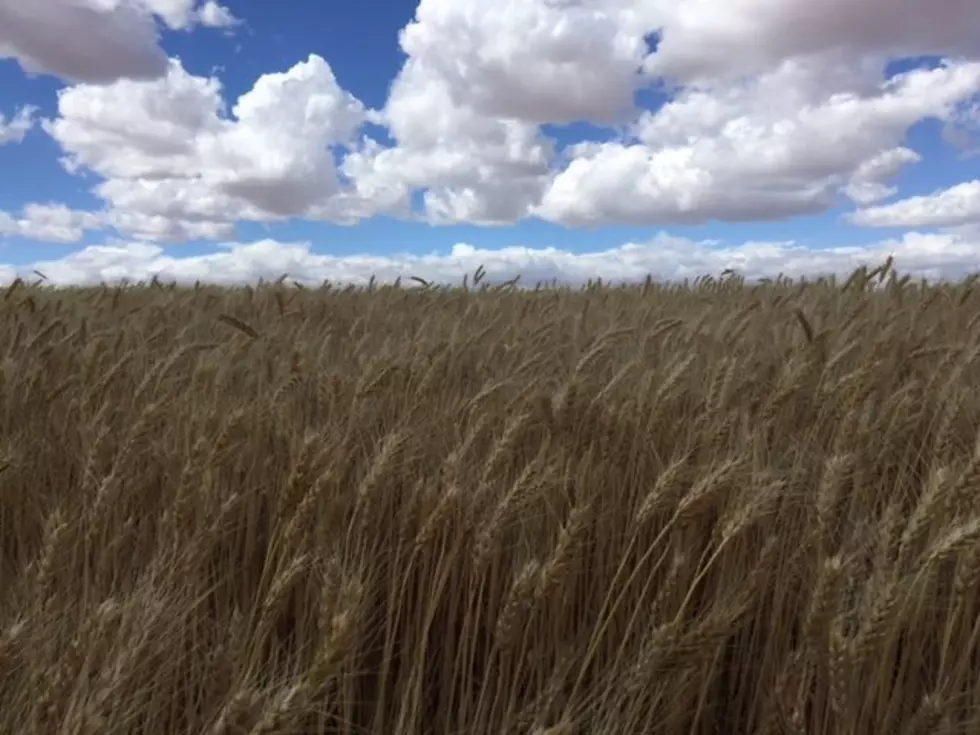
The winter wheat crop continues to be a challenge nationally.
“An interesting start to the season, not necessarily in a good way,” noted USDA meteorologist Brad Rippey. He added it's been that way for several months, where many production areas, including the Northwest, have been very dry. Rippey said some locatio...
The USDA is out with its first winter wheat condition report of the season.
"We see, first of all a bit of a rarity for winter wheat, and that is the overall national conditions improved over the winter," said USDA meteorologist Brad Rippey. "Th
...
Ask USDA meteorologist Brad Rippey, and he'll tell you there are some concerns when it comes to the winter wheat crop. He said according to the latest numbers, 43% of the crop rated good to excellent, 21% very poor to poor.
"That's actually a bit of a drop from last week's numbers when we saw 46% good to excellent and just 18% very poor to poor," Rippey noted
...
"The thing to note is that several states across the plains and the Northwest still dealing with the impact of drought," said USDA Meteorologist, Brad Rippey. "So we see in those states, ahead of average planting progress, but below average emergence which is suggestive of not only the drought but the more recent cold weather
...
According to the USDA, 20% of winter wheat plantings were complete by Sunday, September 20th. USDA metorologist Brad Rippey said that's one percentage point ahead of the 5-year average and two points ahead of numbers reported last year.
"We see three states that have reached the 40% mark for winter wheat planting
...
It's moved at a slow pace this year, but the USDA says spring wheat planting is nearly complete. According to meteorologist Brad Rippey, nationally, 91% of spring wheat is in the ground, which is off the five-year average of 96% and just slightly ahead of last years 90%
...
How can you tell if you emerged crops are getting the correct amount of boron?
If you have a story idea for the Washington Ag Network, call (509) 547-1618, or e-mail gvaagen@cherrycreekradio.com
When it comes to Spring wheat, plantings here in the Northwest are in good shape, but the rest of the country continues to struggle. USDA meteorologist Brad Rippey said nationally, 14% of the intended spring wheat acreage is in the ground
...
When it comes to the national winter wheat pictures, the USDA is emergence is now at 87%, which is improved from last year's 85% at this time, but off the five-year average of 90%. USDA Meteorologist, Brad Rippey, said there are some concerns nationwide.
...